Labor Market

Japan’s rising wage growth in September reinforces the Bank of Japan’s rate tightening campaign and supports our underweight in JGBs. Headline nominal wage growth accelerated to 4.6% from 3.9% in August and came in well above the market consensus of 3.8%. It…

Please note that going forward we will no longer send email alerts when we publish our regular US labor market and inflation chartpacks. These chartpacks will still be published on the website on days of US employment report and CPI releases.

The Q3 US employment cost index (ECI) underscores that the risk of US overheating is low, for now. Although it is less timely than other measures, the ECI is the gold standard to measure labor cost growth in the US. It adjusts for compositional effects and…

Despite a stronger-than-expected employment report, the BoE is unlikely to hike as much as markets anticipate. Payrolls rose by 13k in September against an expected decline, and August’s initially reported decline was revised to a gain. The unemployment rate…

Australia's labor market is softening, strengthening the case for Australian government bonds. The unemployment rate ticked up to 4.7% in September, while employment growth remains subdued. The number of people unemployed for more than a year has risen to its…

US inflation came in hot for the second consecutive month in September, though probably not hot enough for the Fed to move its next rate hike up to the October meeting.
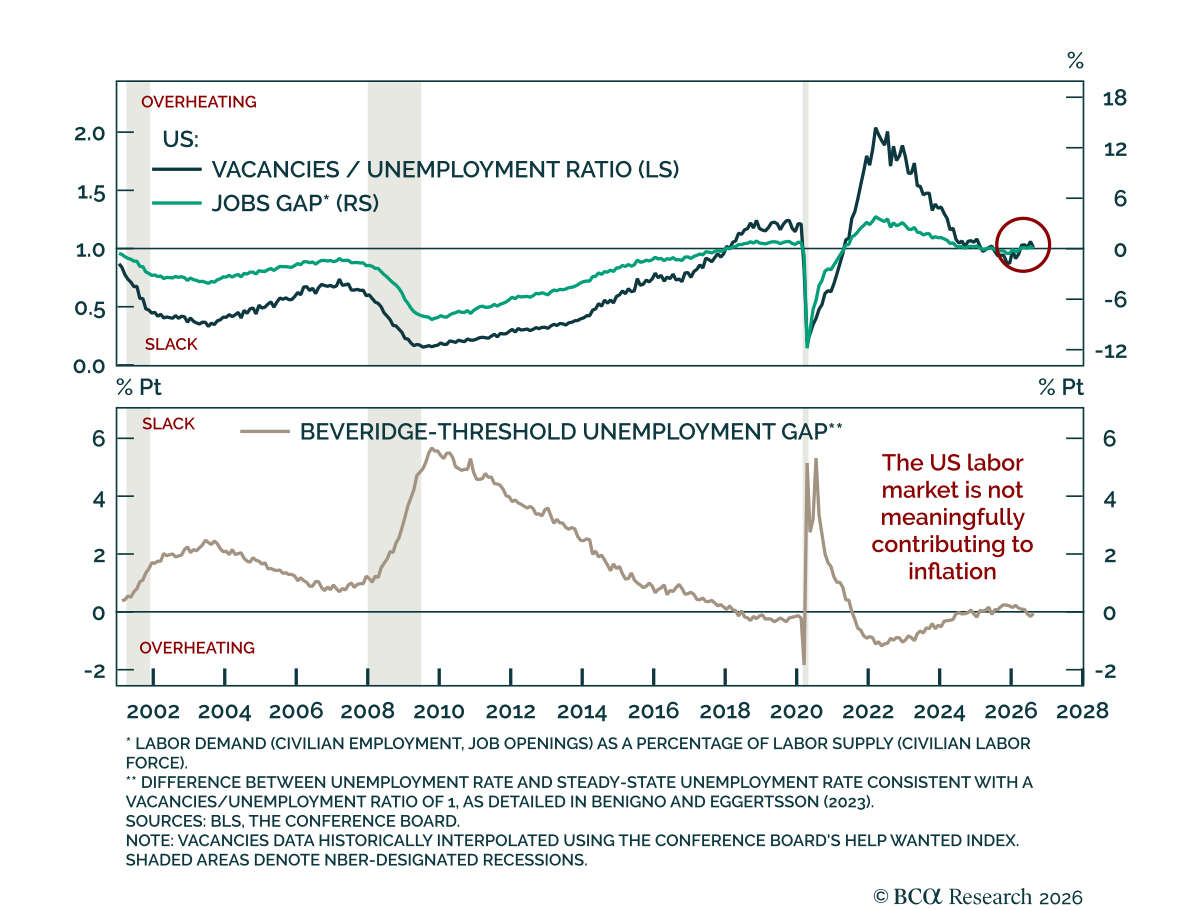
The September jobs report was slightly cool, confirming that the labor market remains roughly balanced and reducing pressure on the Fed to hike in October. Nonfarm payrolls rose by only 29k, below estimates, while two-month revisions removed 60k jobs and left…

Our clients strongly expect the crackdown on unauthorized immigration to be inflationary. Three-quarters of BCA clients hold this view, while 17% see it as roughly neutral and only 8% as disinflationary. Social media respondents on LinkedIn and X leaned the…
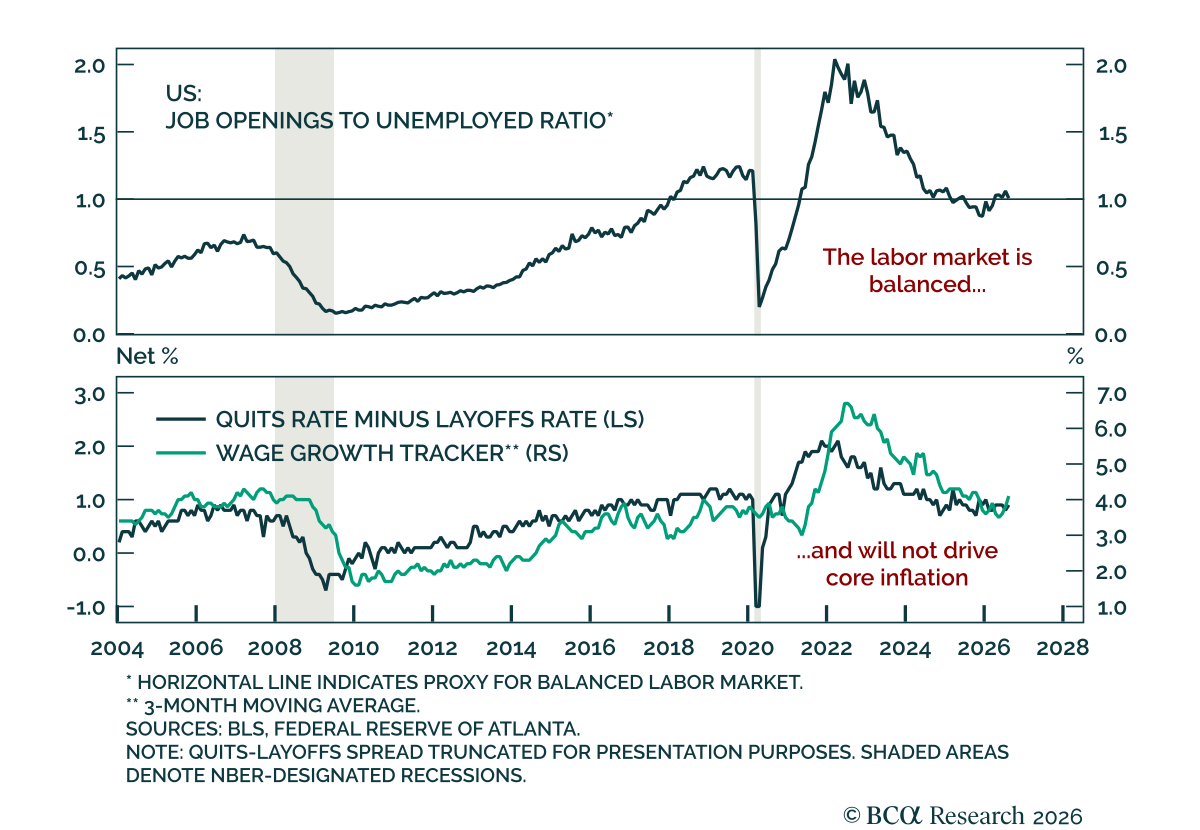
The August JOLTS report did not point to the labor market as a source of inflationary pressure or indicate that labor demand is weakening. Job openings slipped to 7.08 million in August, the lowest level since March, following an upwardly revised 7.34 million…
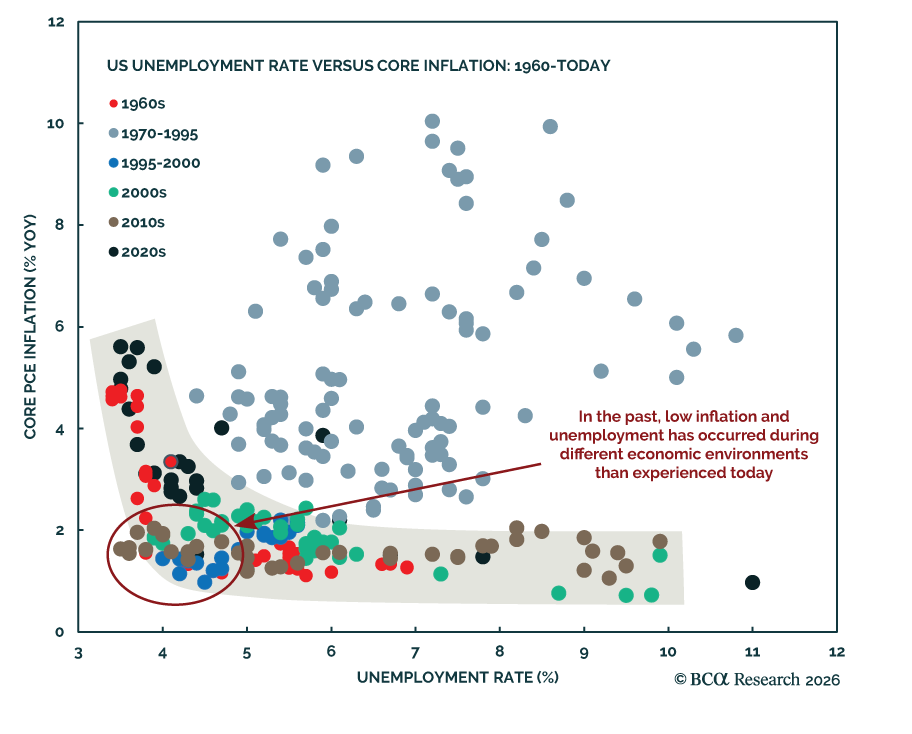
A tighter labor market over the coming year could cause inflation to stay elevated even if tariff and energy shocks dissipate. The US labor force has contracted over the past year, driven by the departure of unauthorized immigrants and a decline in the labor…