Skip to main content

Productivity

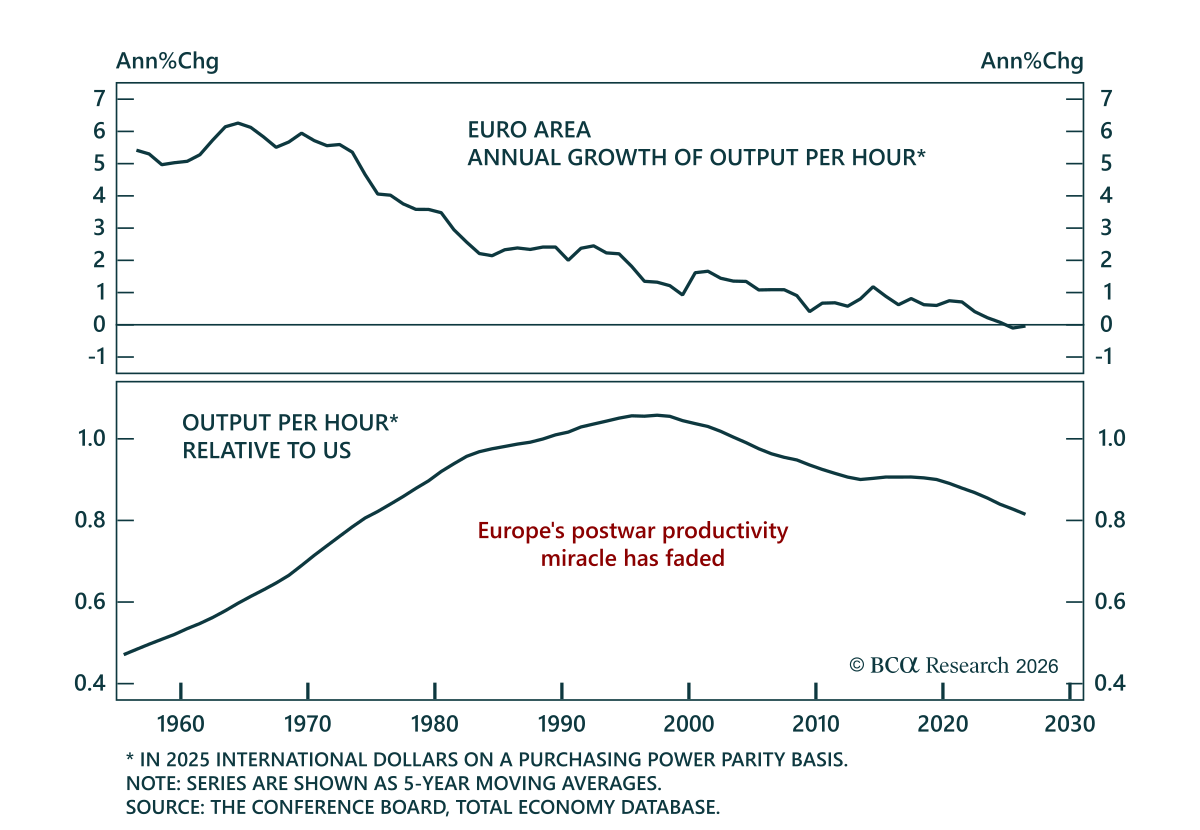
Peter Berezin, our Chief Economist, recommends selling European assets on any rallies. Peter argues repairing Europe’s deep structural problems may require dismantling much of the welfare state, which is unlikely to happen before a major crisis. Lower oil…
Special Report

Europe faces deep structural problems. Dismantling large parts of the welfare state might be necessary to rectify these problems, which is unlikely to happen before there is a major crisis. Until then, investors should “sell Europe” on any rallies.
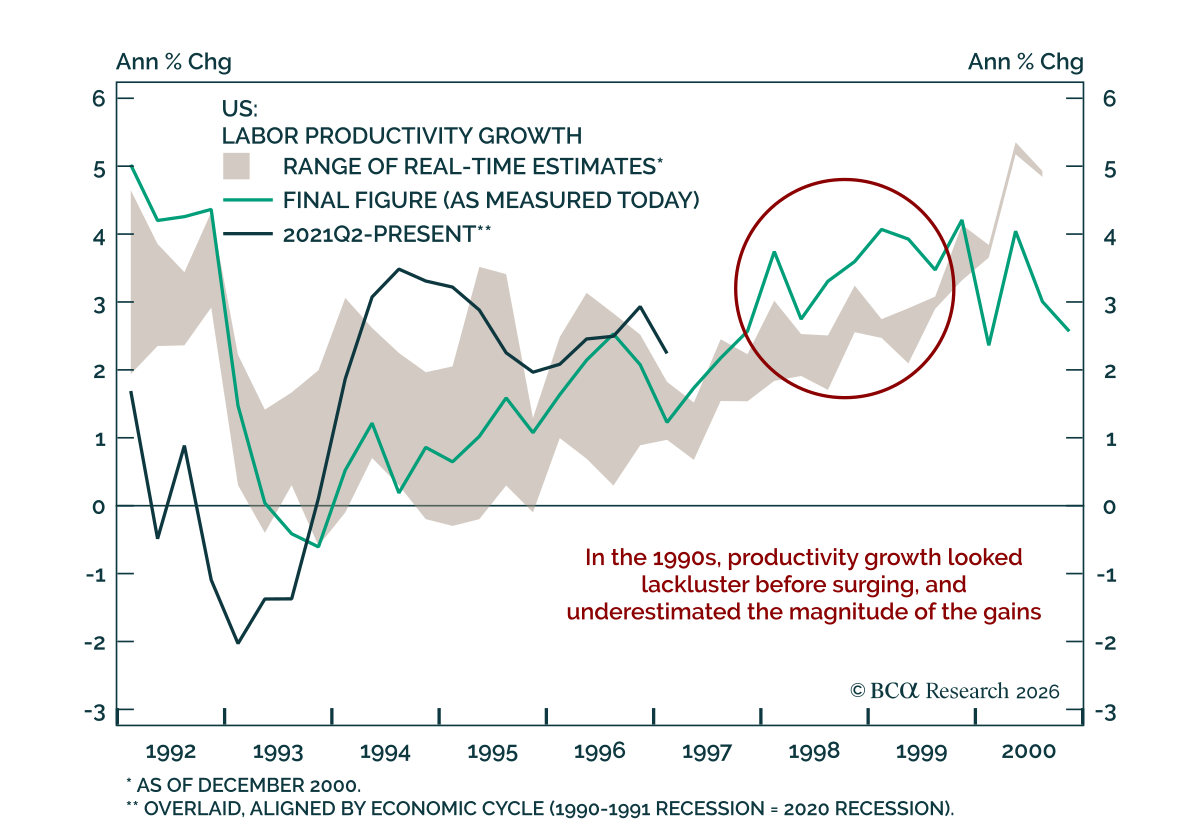
Investors should favor long-maturity government bonds if concrete signs of AI-related productivity gains emerge. Long-maturity government bond yields have risen substantially this year. The rise in energy prices since March has been the main driver, but…
Stronger US productivity and cooler unit labor costs point to favorable cyclical dynamics, but it is still too early to attribute the improvement to AI. Preliminary Q2 nonfarm productivity beat estimates, rising at a 1.4% annualized pace from an upwardly…
Mexico still looks attractive on a cyclical horizon, but the lack of productivity growth argues against a secular bull market. Our Chart Of The Week comes from Max Malak, from our Emerging Markets team. Our EM team is bullish on Mexican assets: Tariff fears…

We continue to overweight Mexican stocks, local bonds, sovereign credit, and currency within their respective EM portfolios. Also, stay long Mexican equities / short the S&P500.
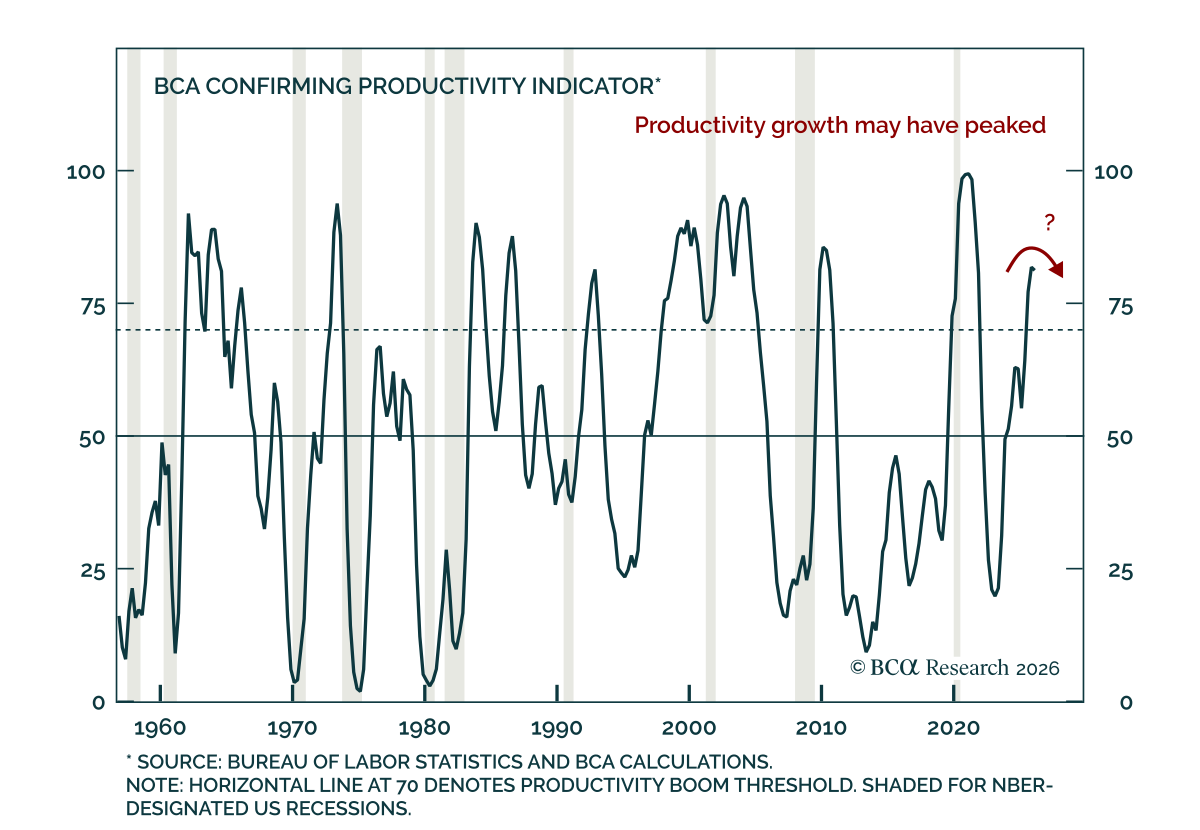
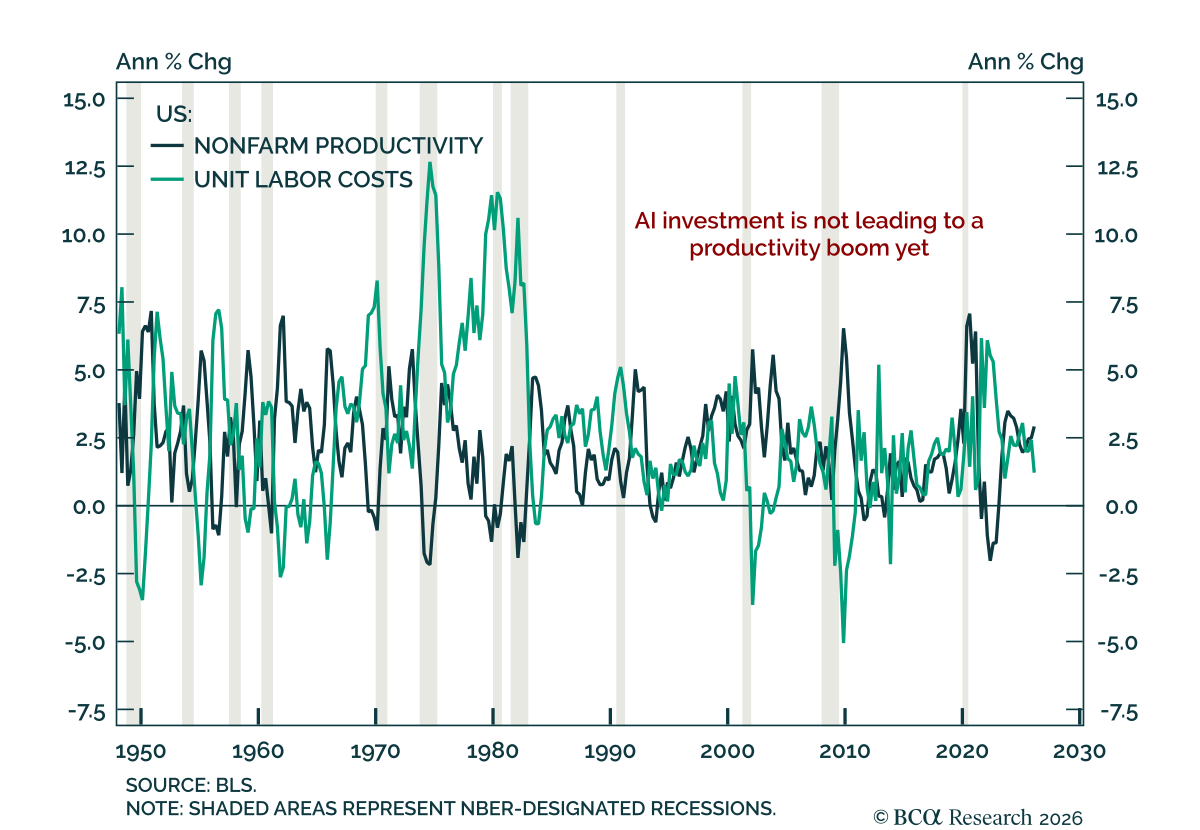
Q1 productivity data do not support the case for a broad, AI-driven productivity boom. We noted last week that US productivity growth in Q1 was lackluster. Our BCA Confirming Productivity Indicator, available on BCA’s new Artificial Intelligence Dashboard,…
Productivity data still does not point to a broader US productivity boom. Nonfarm productivity rose 0.8% q/q annualized, above expectations, though down from a downwardly revised 1.6% in Q4. Unit labor costs came in below expectations at 2.3%, down from 4.6%…
Bank Credit Analyst

In Section II, Jonathan examines whether the AI “scaling laws” are likely to hold. They will over the near term, but cracks are already beginning to form in the narrative of ever-improving AI.

The rush to build AI infrastructure is based on a false premise: that there are significant advantages to being the first to come to market.